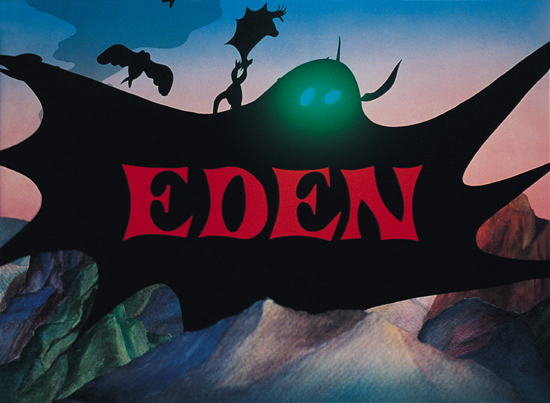
A hand-crafted animated odyssey through myth, satire and modern absurdity.
Eden is a feature-length animated film by Andrzej Czeczot, created as a non-dialogue journey through Hell, Heaven and a distorted contemporary paradise. It does not imitate live-action behavior or mainstream animation formulas. It works through image, rhythm, allegory, grotesque invention and music.
A wanderer moving through impossible orders.
Youzeck, a shepherd and observer rather than a triumphant hero, moves through infernal bureaucracy, uneasy paradise, mythological episodes, cultural echoes and surreal historical landscapes. Along his path, sacred and profane, comic and tragic, archaic and modern continually collapse into one another. The destination is not simply geographical. It is civilizational.
The film in motion
The journey begins with a breach in ordinary reality and unfolds through Hell, Heaven, Purgatory, Noah’s Ark and a final approach toward New York. Devils work like clerks, paradise behaves like administration, mythological figures remain trapped in absurd systems, and music becomes both structure and propulsion.
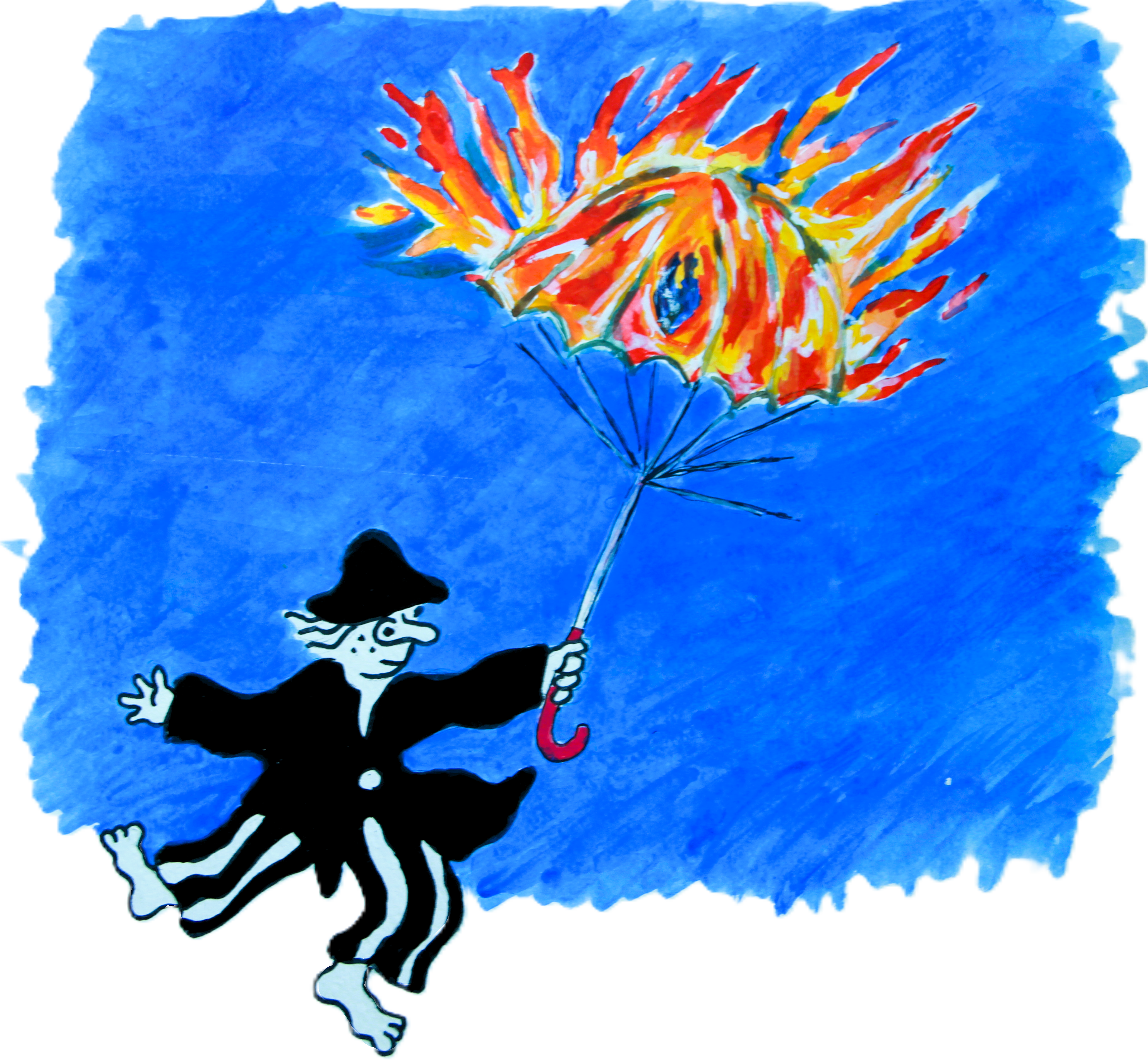
“Animated film in my opinion is a movable painting, kind of a fairy tale. It shouldn’t imitate regular movie with actors.”
Core information, without the ceremonial fog.
Not character realism. Not children’s animation. Not generic fantasy.
Eden does not chase naturalistic acting, mass-market sentiment or franchise-friendly simplification. It behaves more like a moving painted world built from symbols, caricature, satire, theology, folklore, music and cultural memory.
A moving painting
The film’s logic is visual before it is psychological. It advances through image clusters, tonal shifts, symbolic encounters and musical structure rather than through contemporary animation habits borrowed from live-action cinema.
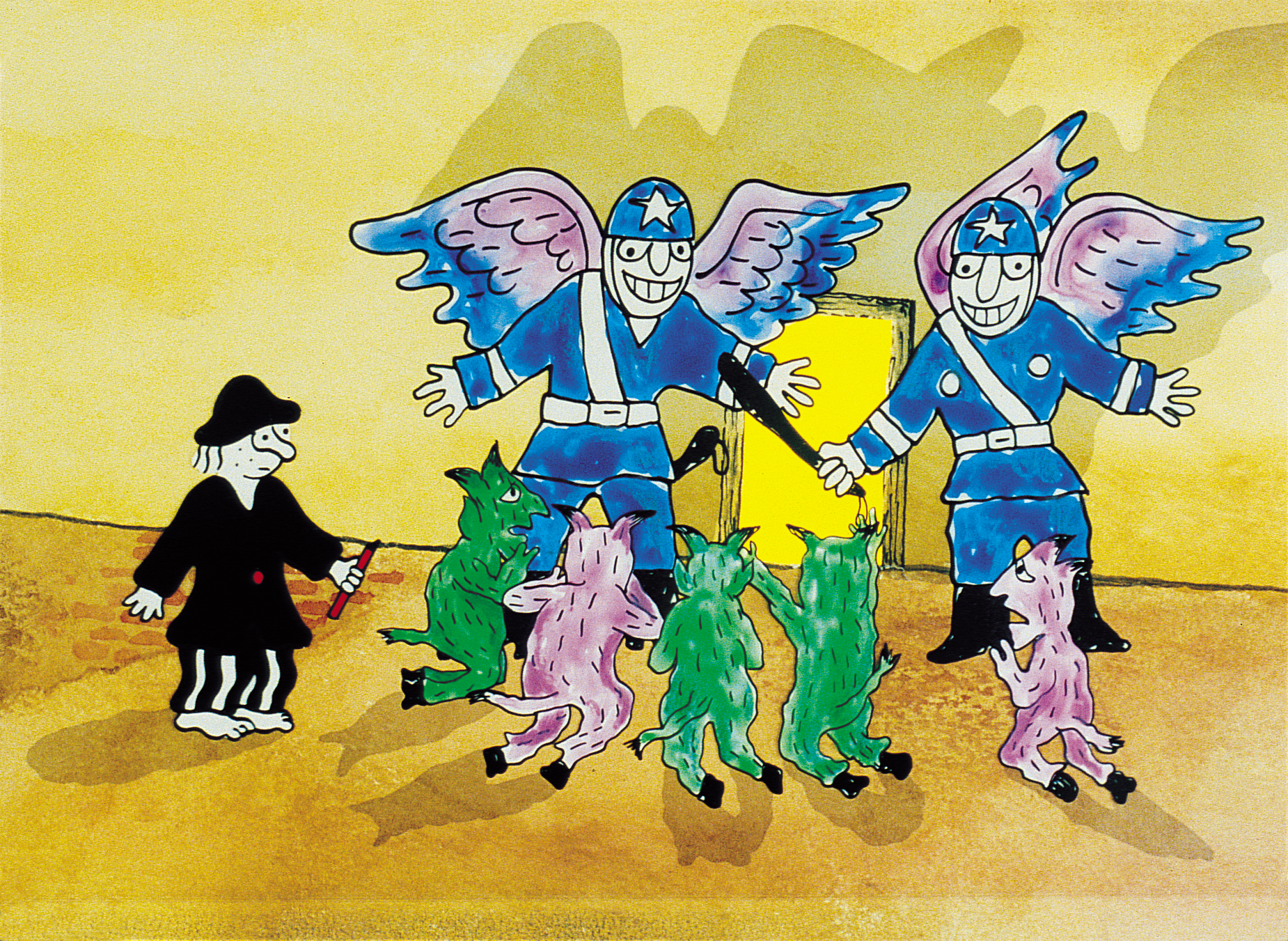
An observer crossing systems rather than conquering them.
Youzeck is not built as a conquering protagonist. He witnesses, moves, escapes, survives and absorbs. That makes him a stronger guide through Eden than any conventional hero could be.
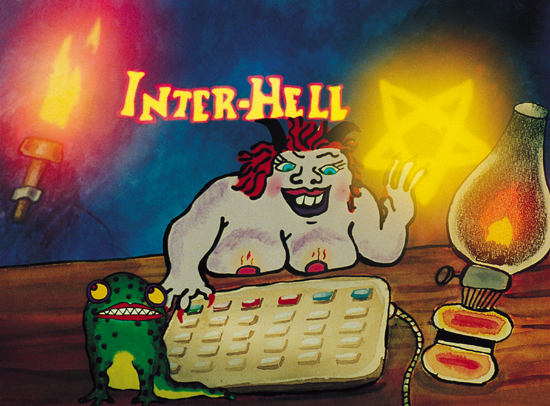
Hell
Infernal space in Eden is theatrical, bureaucratic and grotesquely active. Devils, damned figures and mythological references function less as horror than as satirical machinery.
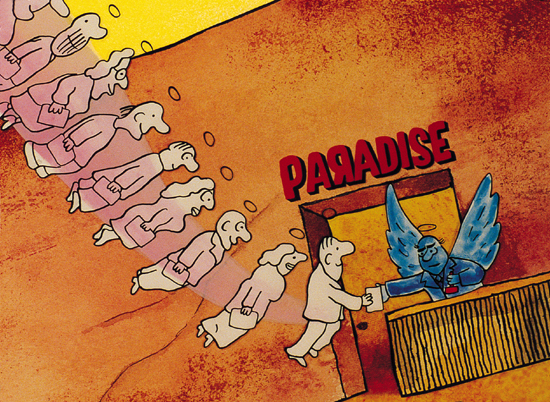
Heaven
Paradise is no sentimental reward. It is orderly, controlled, administrated, suspicious and often absurd. Even holiness becomes a system with rules, guards and boredom.
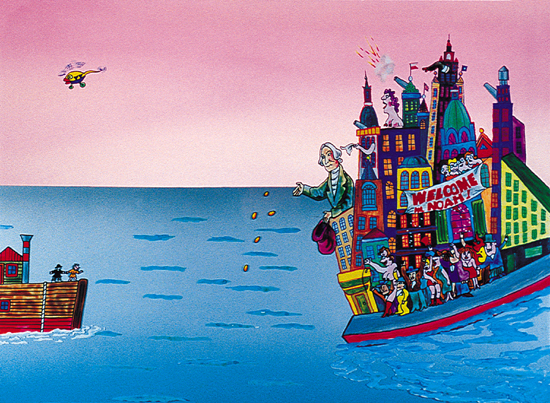
New York
The final movement toward New York transforms metaphysical travel into a civilizational encounter, where spectacle, modernity and distorted promise take the place of transcendence.
Grotesque line, painterly worlds, impossible creatures.
The visual force of Eden lies not only in the quantity of material, but in the consistency of its line and imagination. The grotesque, the ornamental, the infernal, the comic and the sublime all belong to the same hand.
Why the imagery matters
The world of Eden is memorable because it is not decorative filler. It has symbolic force, visual rhythm and enough internal logic to extend naturally into books, exhibitions, objects and future adaptations without feeling manufactured after the fact.
Why it matters now.
Eden deserves renewed attention not only because it is rare, but because it still feels artistically and culturally alive. Its hand-crafted production, authored visual language and international festival circulation place it in a category of works that benefit from restoration, reintroduction and serious contextual framing.
Beyond recovery
The film is not merely an archival object to preserve. It is also a foundation strong enough to support future editorial, curatorial and creative work. That is why Eden belongs not only to the past, but to the next stage of its own life.