Built by hand, frame by frame.
Eden was not assembled through a generic software pipeline. It was directed on paper, painted by hand, photographed through analog production methods and carried through a materially dense process whose traces still survive in storyboard pages, brief documents, cel work, archive photography and film elements.
All visual work was hand-made.
One of the surviving production sheets states it plainly. That sentence is not decorative. It is the governing fact behind the entire film and the right place to begin.
“During the making of this film all visual work was hand-made.”
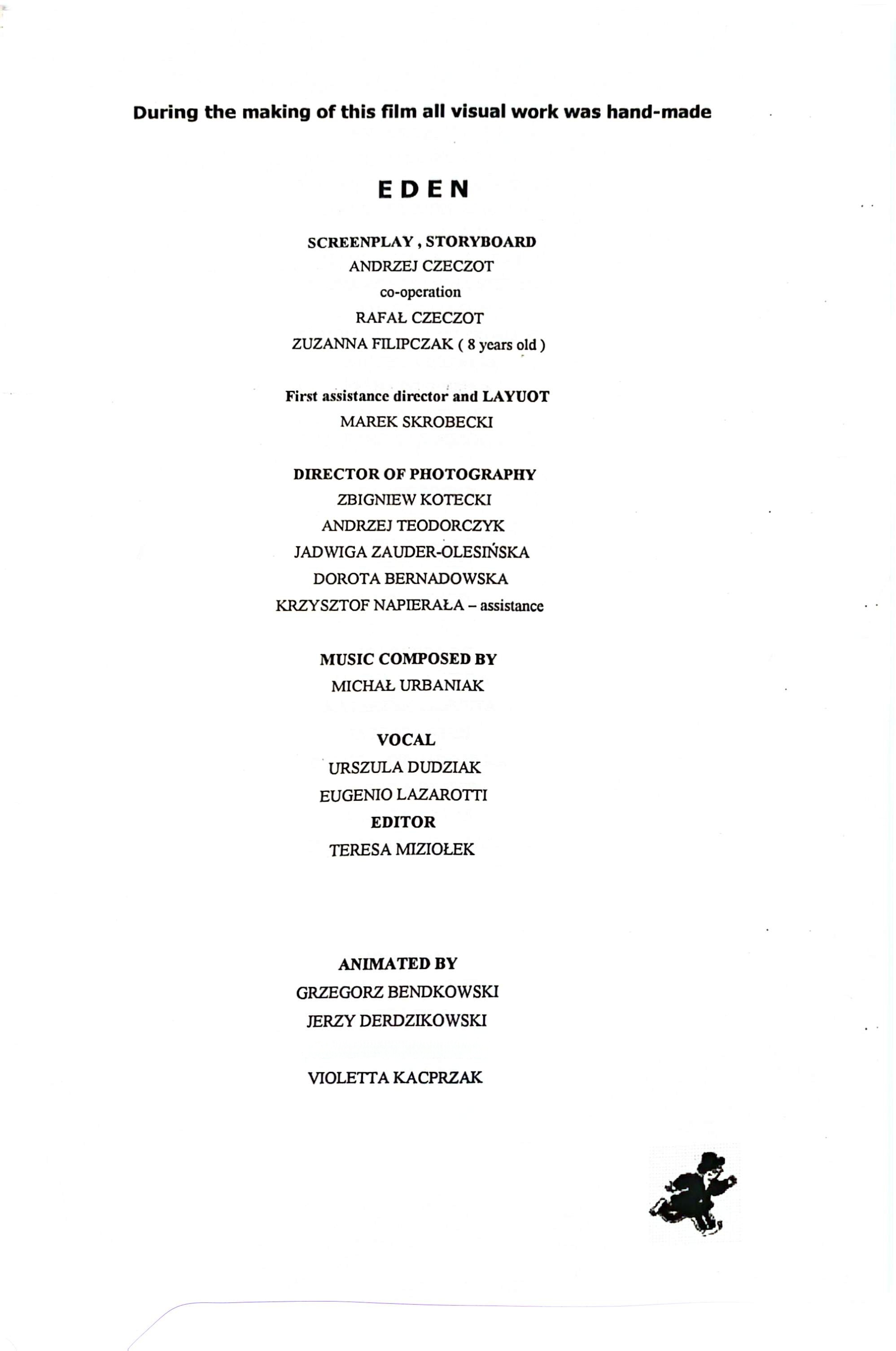
Before animation, there was a visual script.
The surviving brief pages show how Eden was conceived: not as dialogue-heavy screenplay realism, but as a sequence of visual situations, allegorical transitions, music-driven movement and authored image logic.
A movable painting
One of the key development texts defines animation as a moving painting and rejects the imitation of live-action behavior. That principle is visible everywhere in the film’s process materials. The image leads. Movement follows. Meaning emerges through rhythm, transformation and juxtaposition.
- Visual situations before conventional screenplay logic
The brief frames the project through sequences of images, not naturalistic dialogue scenes. - Myth, satire and allegory as structure
The world is built through symbolic collision rather than plot mechanics alone. - Music as narrative propulsion
Sound is embedded into the script logic from the outset.
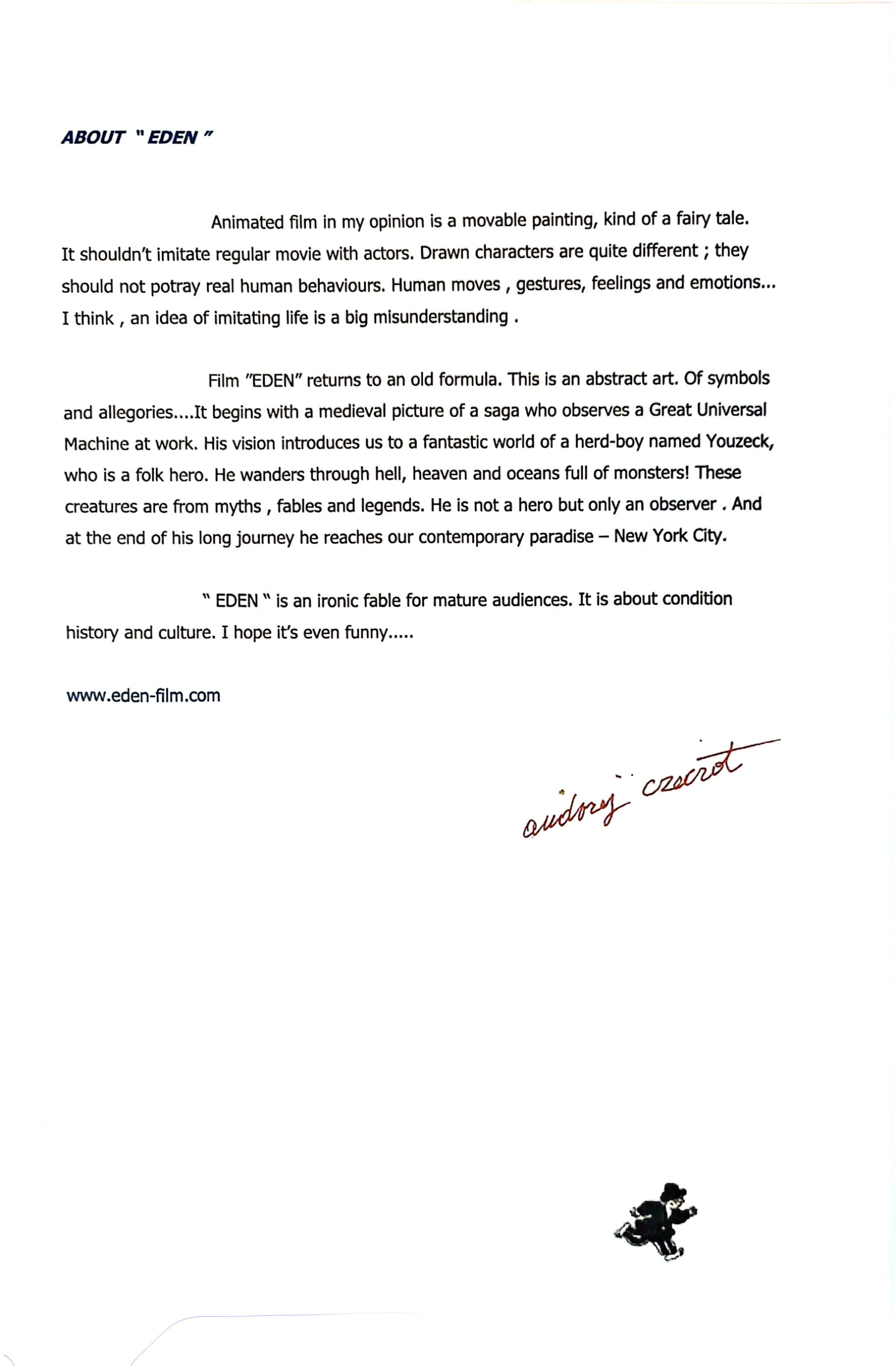
An authorial statement defining animation as a “movable painting” and rejecting the imitation of ordinary filmed acting.
The film was directed on paper before it was animated.
These storyboard pages preserve camera movement, cuts, timing, sound cues, compositional changes and scene progression. They are not rough mood sketches. They are working directing documents for a feature-length animated film.
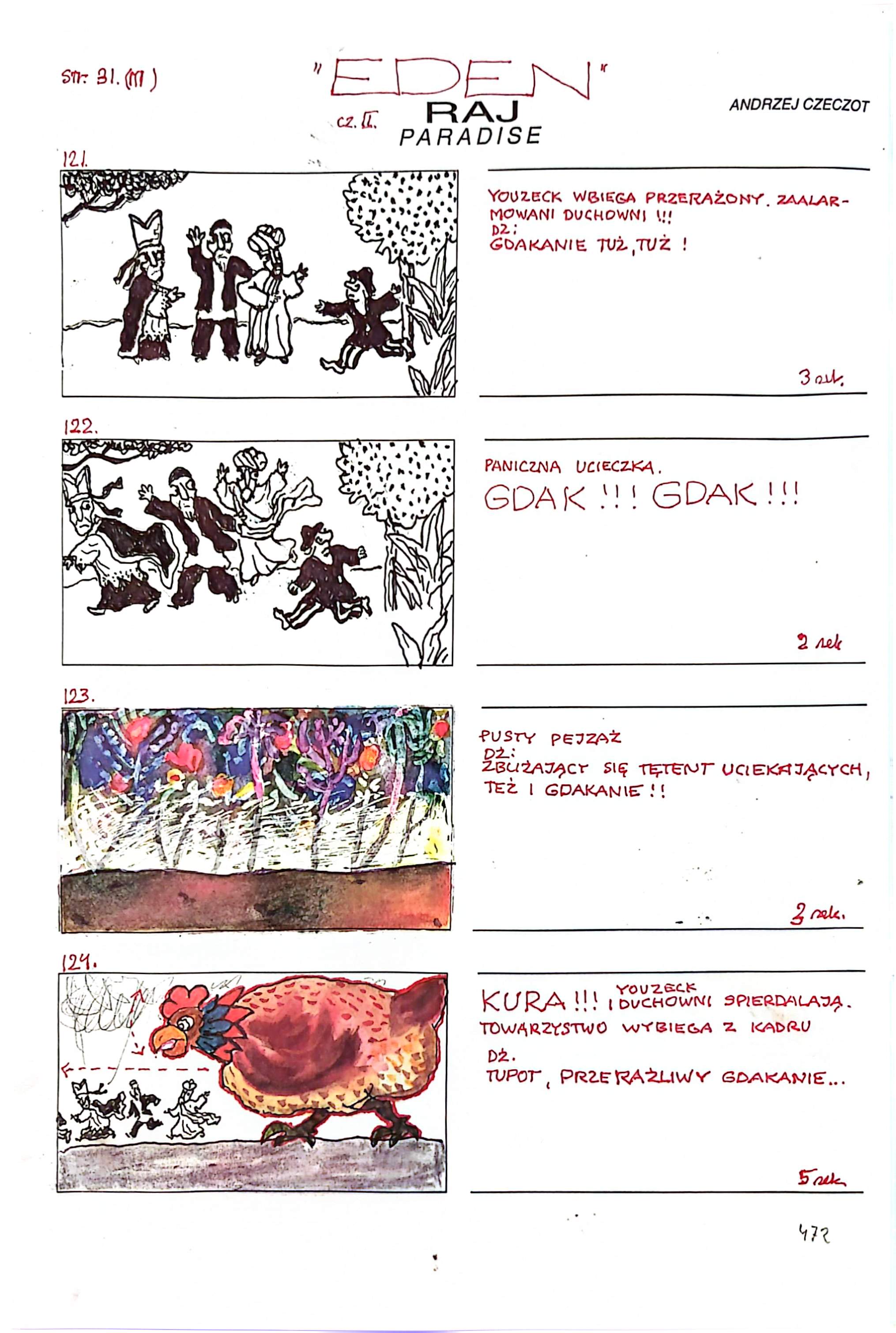
Scene page for Paradise, with numbered shots, camera cues and duration notes.
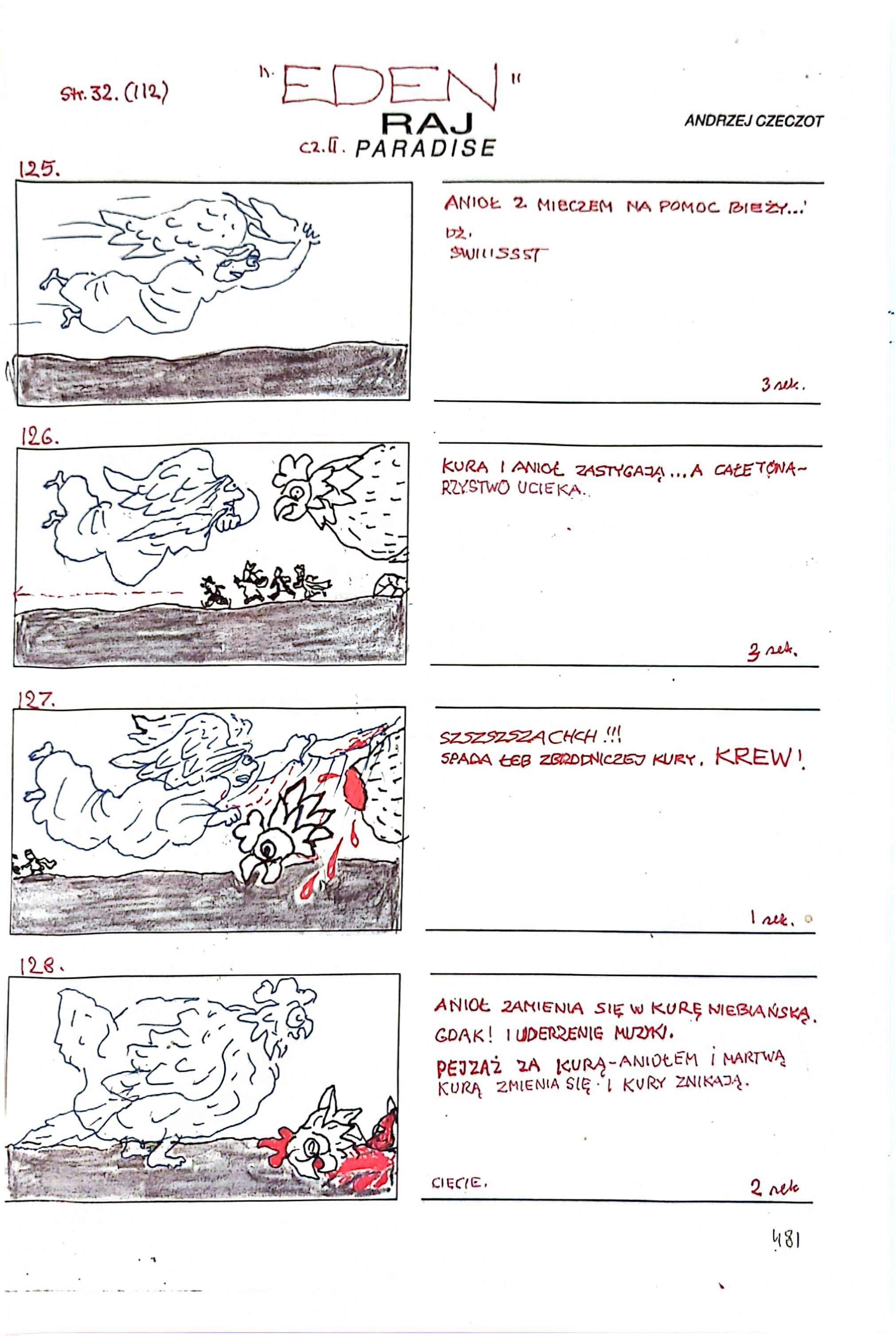
Another working page from the same sequence, preserving action beats and cut structure shot by shot.
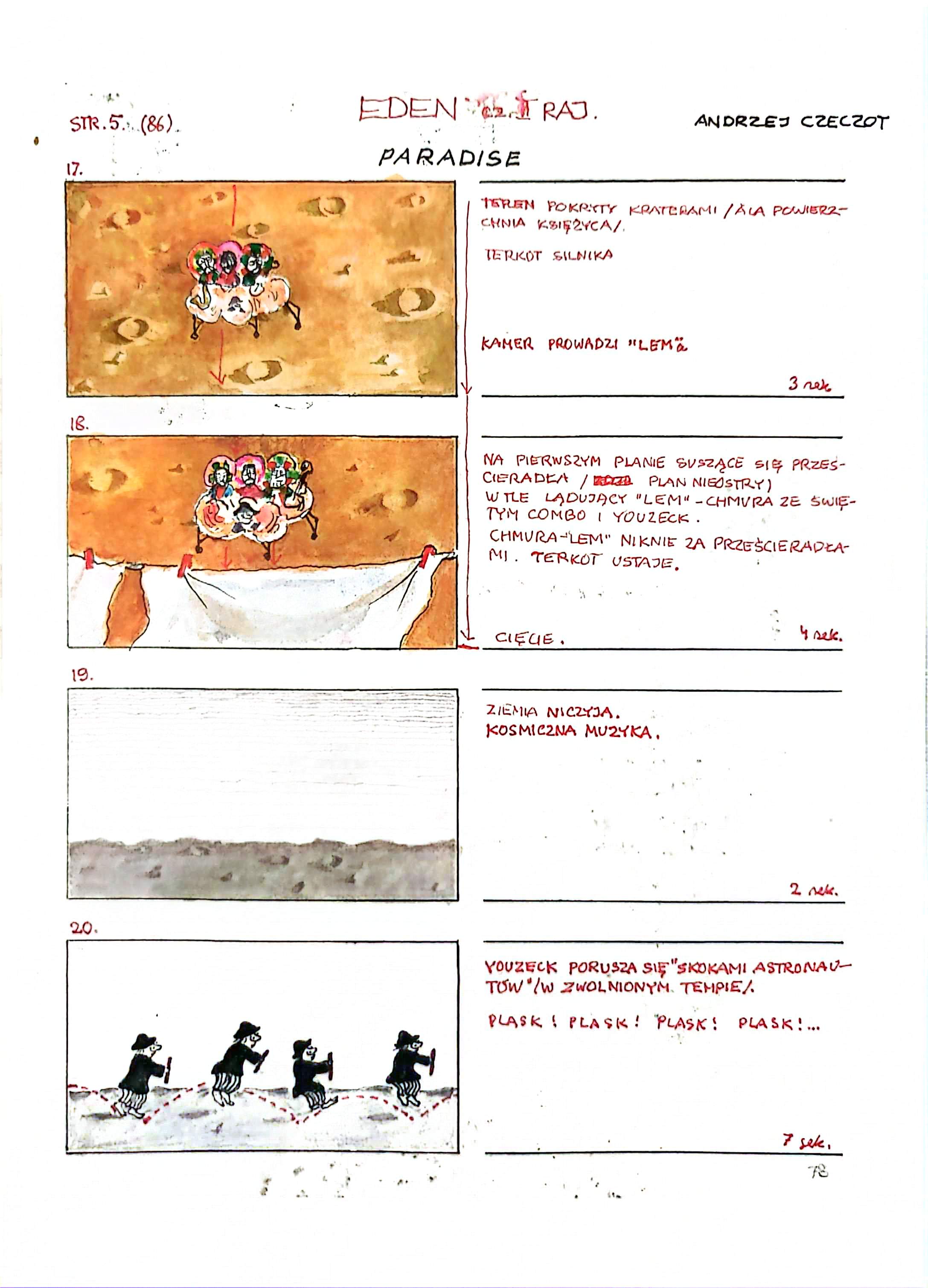
Youzeck’s movement reduced to essential frame logic.
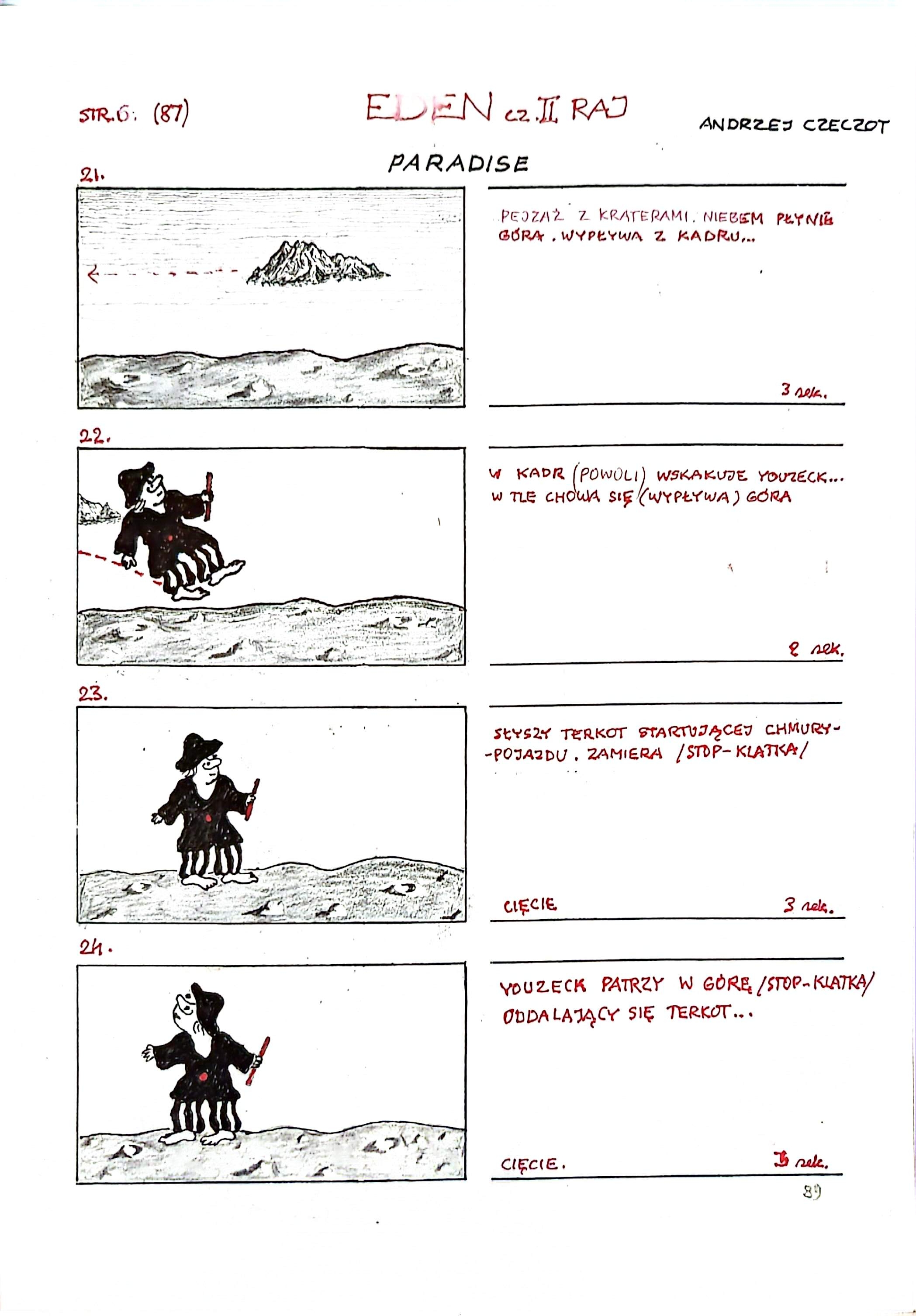
Vehicles, motion direction and scene transition planned visually in advance.
Why these pages matter
The strongest evidence of authorship is not only the finished frame. It is the thinking that precedes it. Here, timing is written into the image, sound is embedded into the panel notes, and movement is already being staged before any cel is painted.
Concept, synopsis and production identity.
Alongside the storyboard pages, the surviving brief materials document how the film was presented, described and structurally organized during development and circulation.
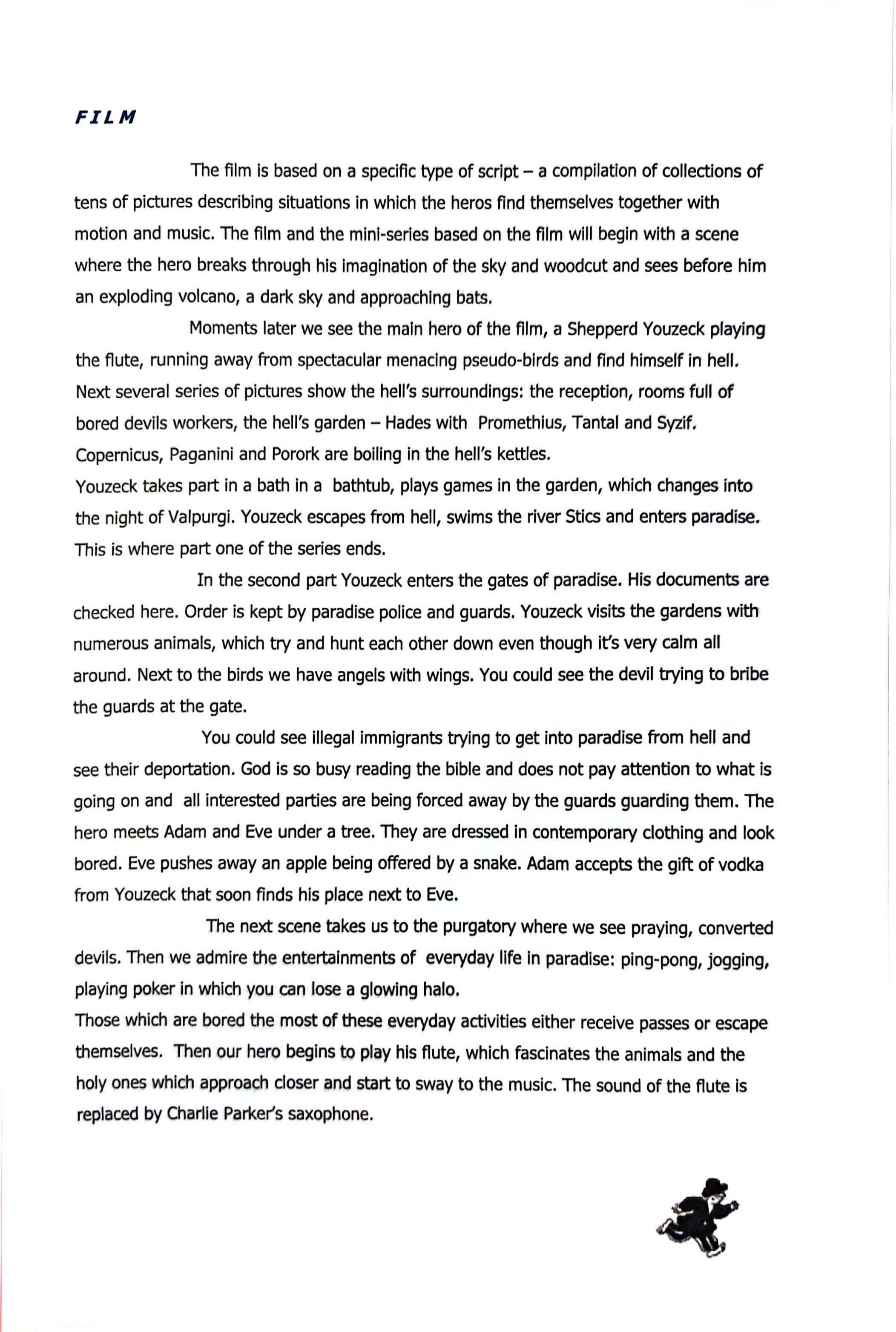
A development text outlining the journey through Hell, Paradise and beyond.
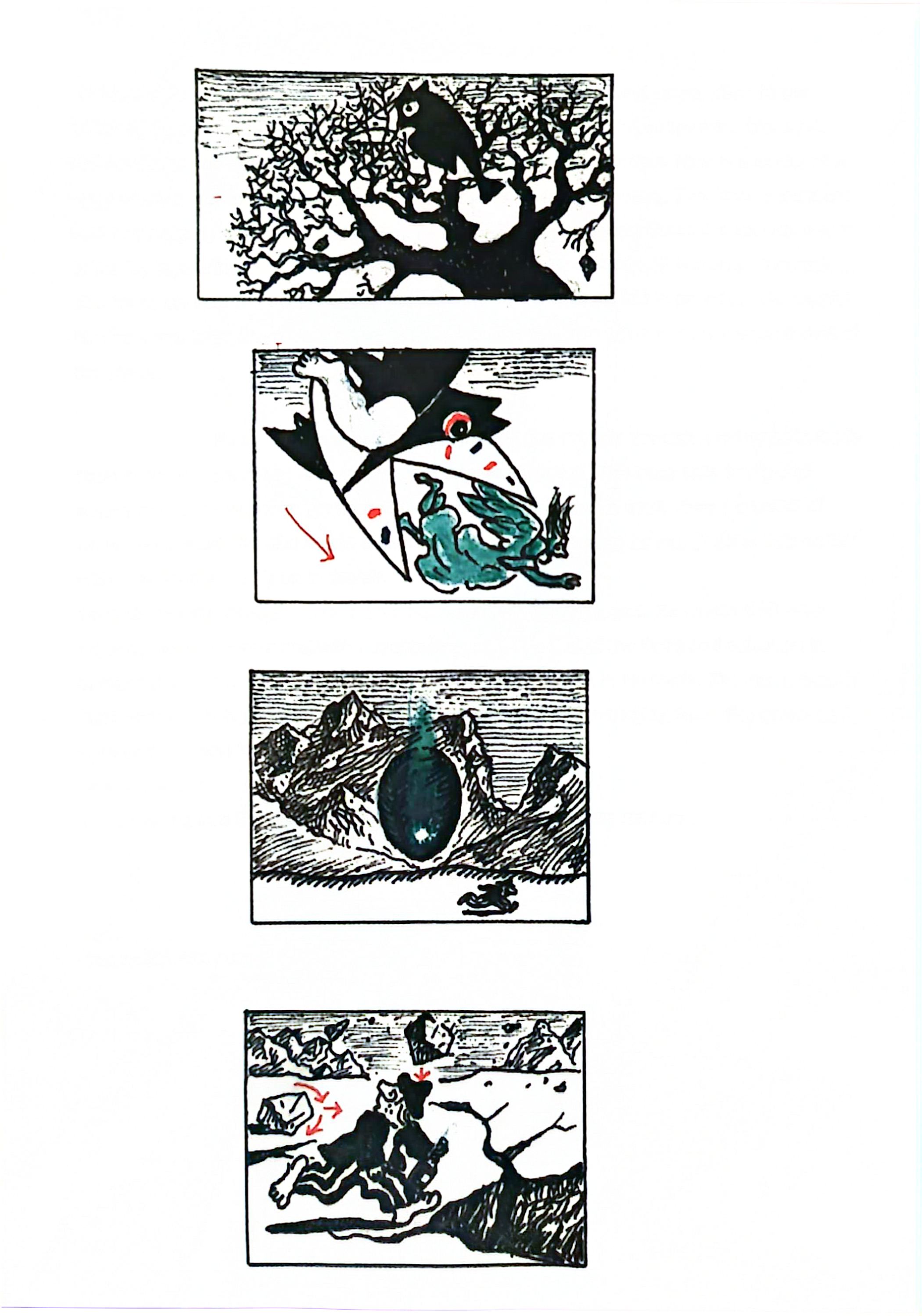
Sequential image planning as narrative construction.
The world expands through scenes, movement, music and transformation rather than ordinary dramatic dialogue.
Line, paint, cel and camera as physical workflow.
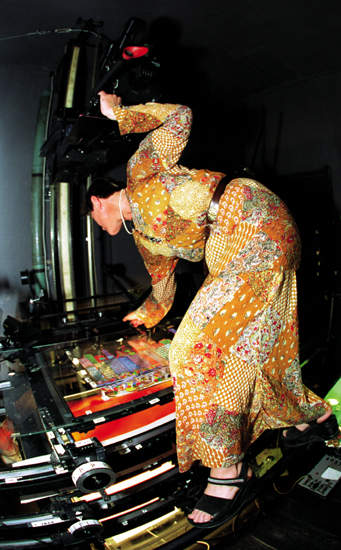
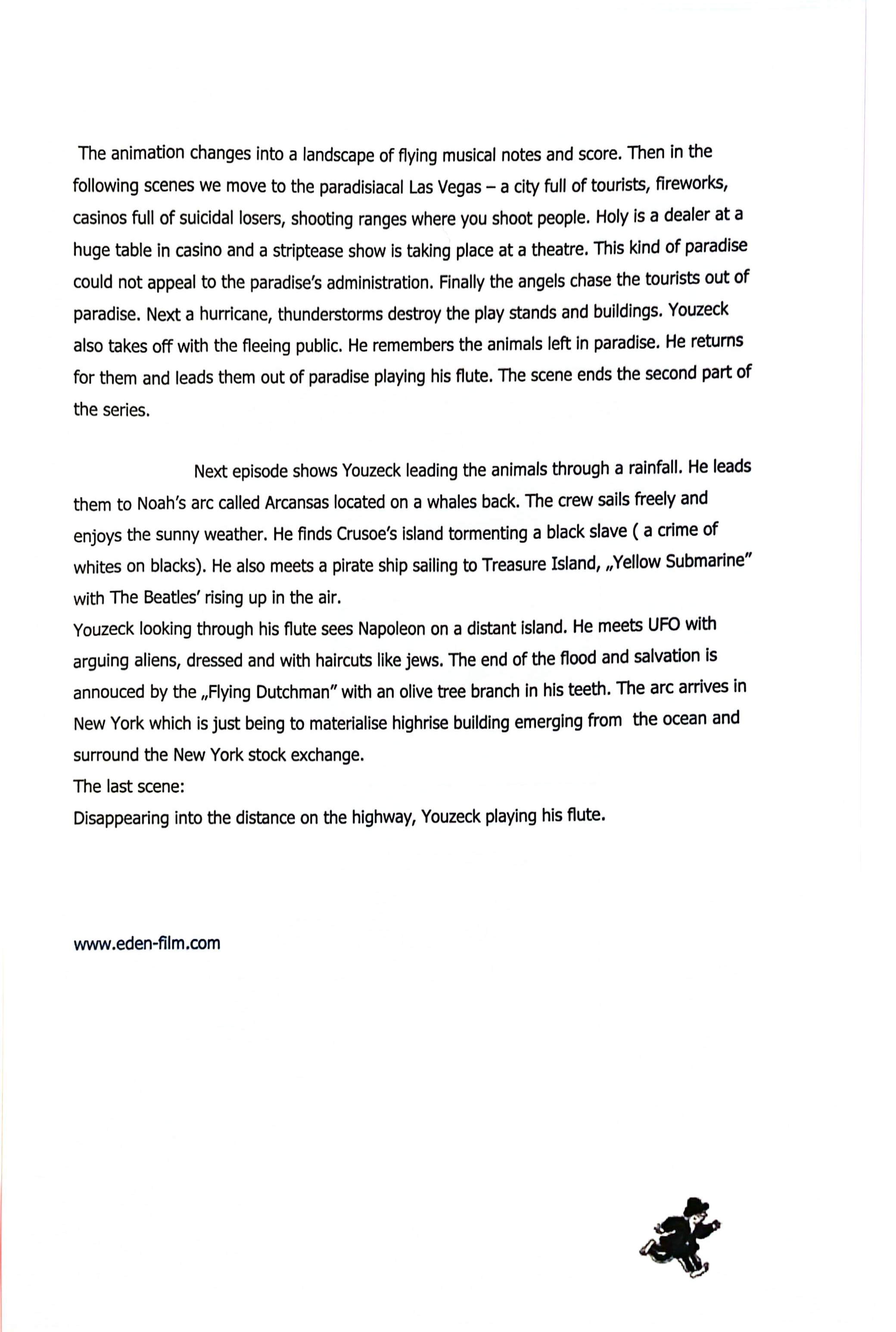
The process photographs make the production logic visible: drawing at the desk, painting on cels, checking layered material on the camera stand and building the film as a sequence of material interventions rather than digital shortcuts.
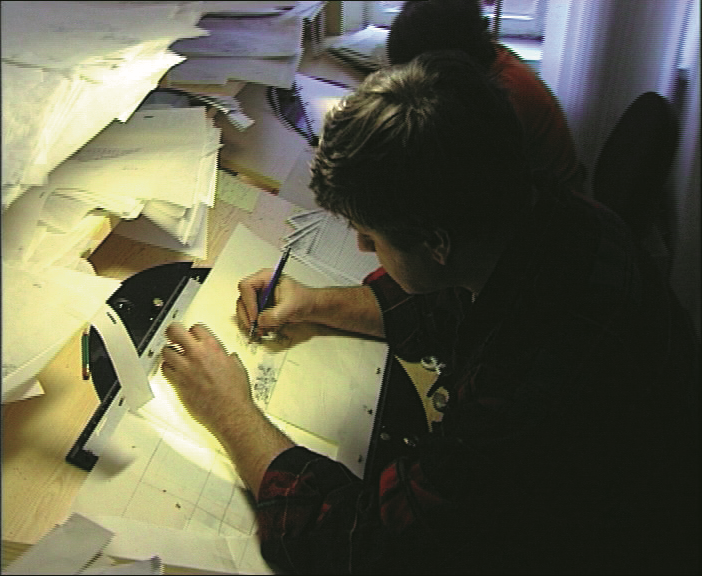
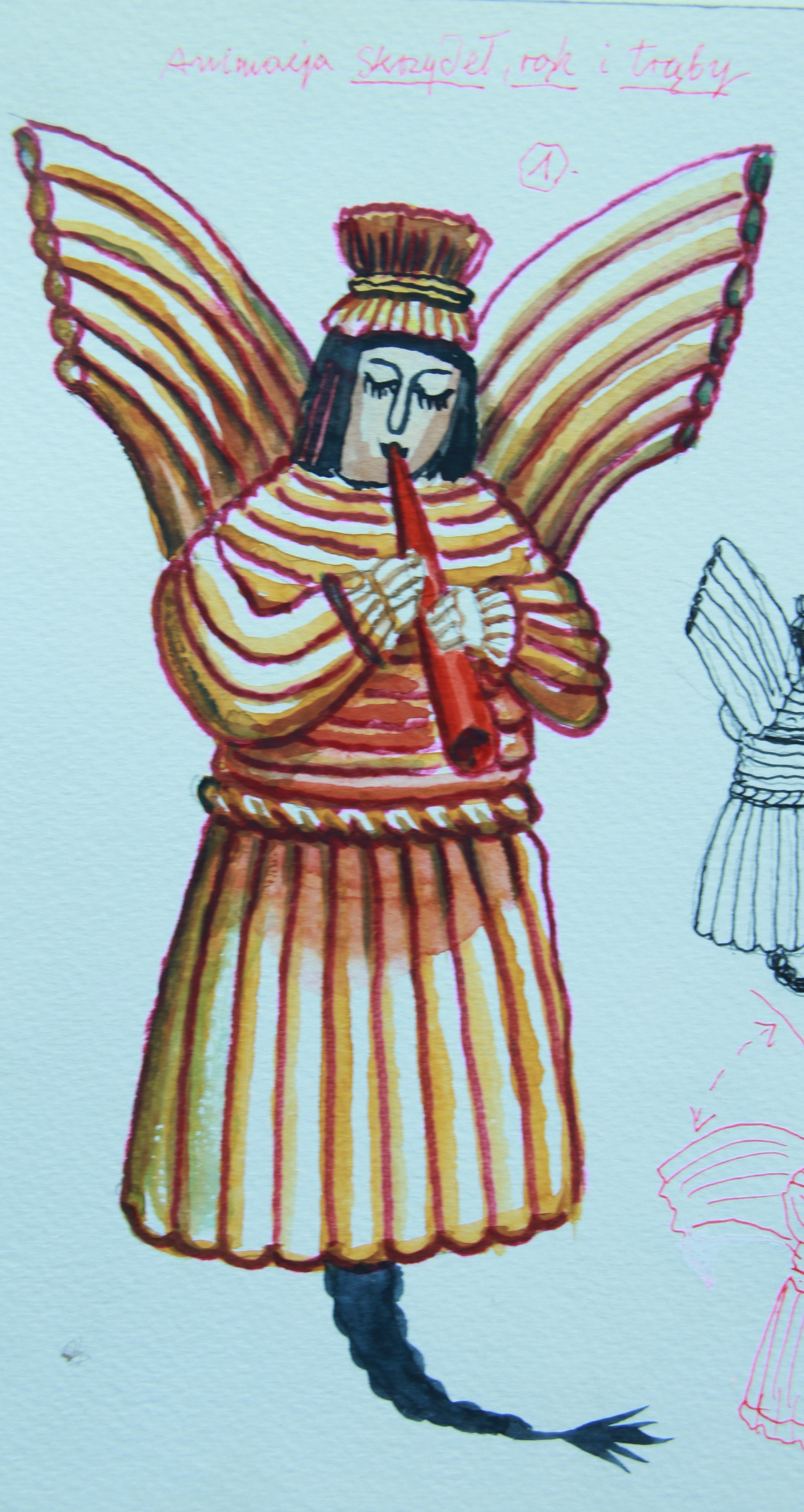
Hand-painting directly onto production material.
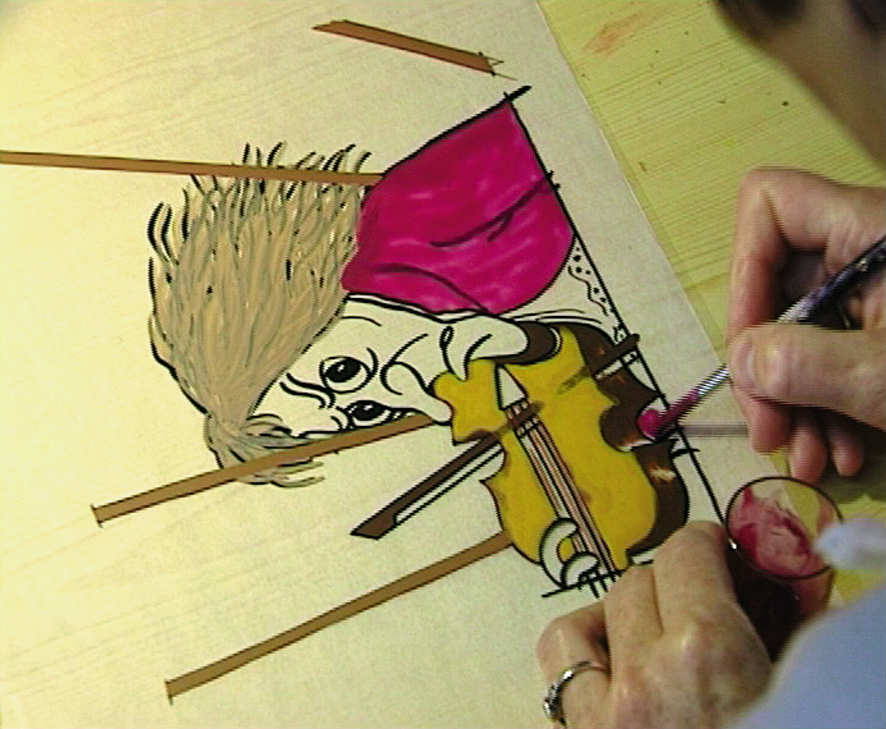
A character element being finished by hand, one layer at a time.
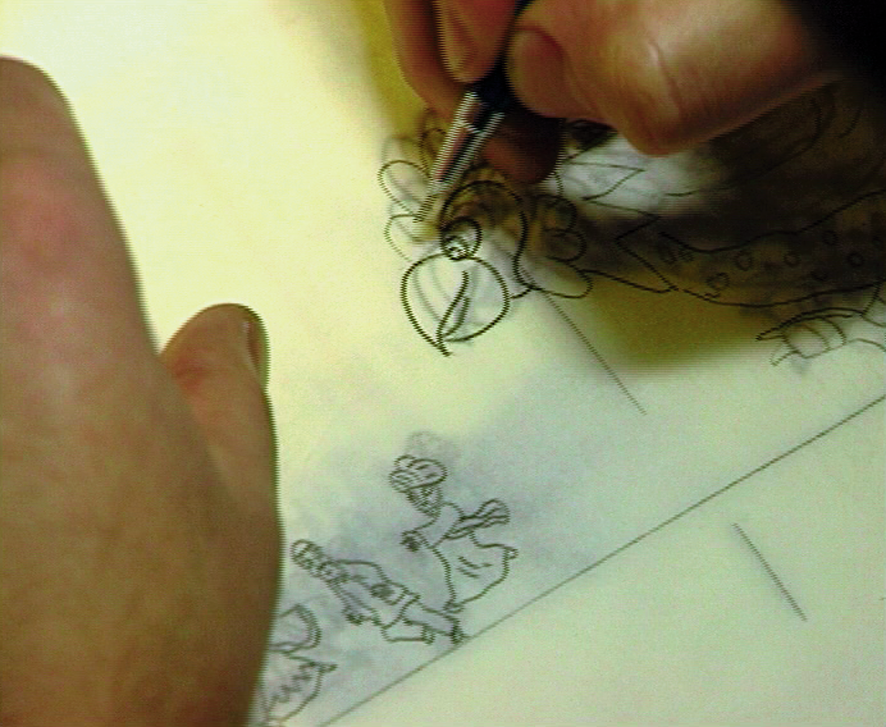
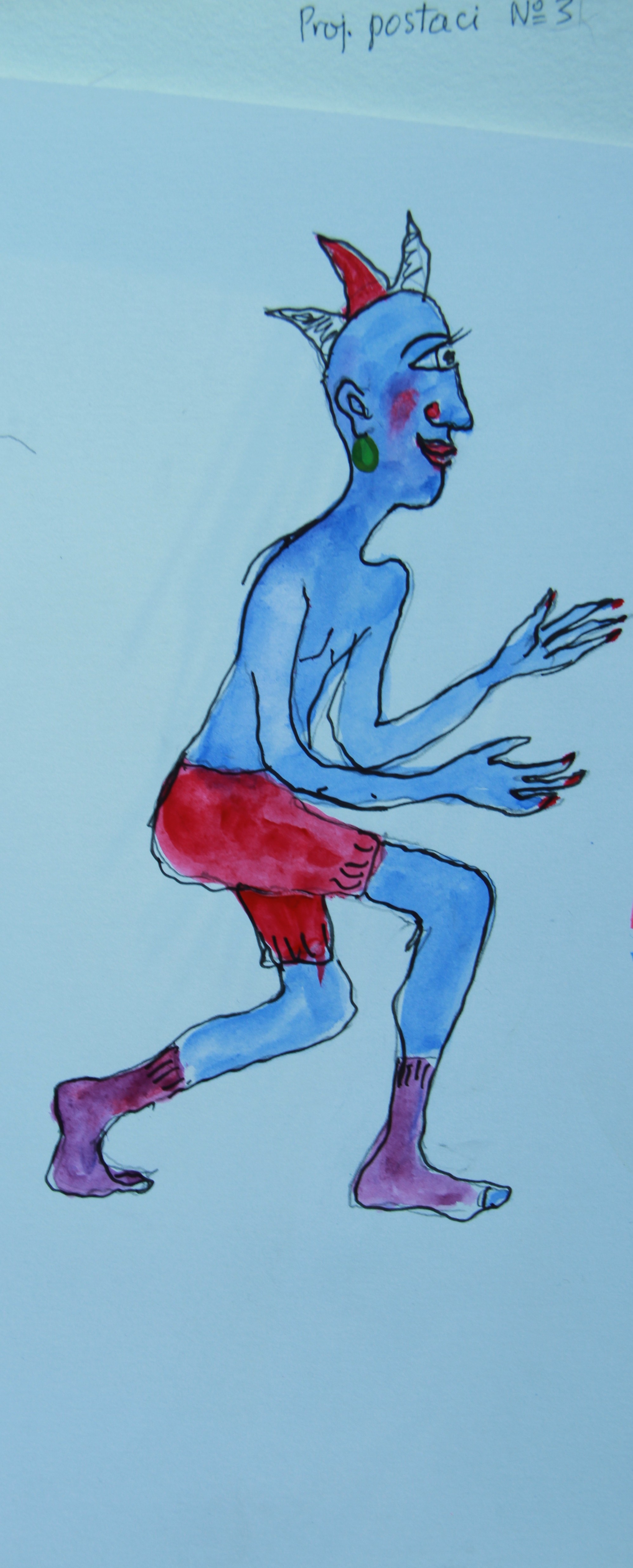
Character studies and visual decision-making at the desk.
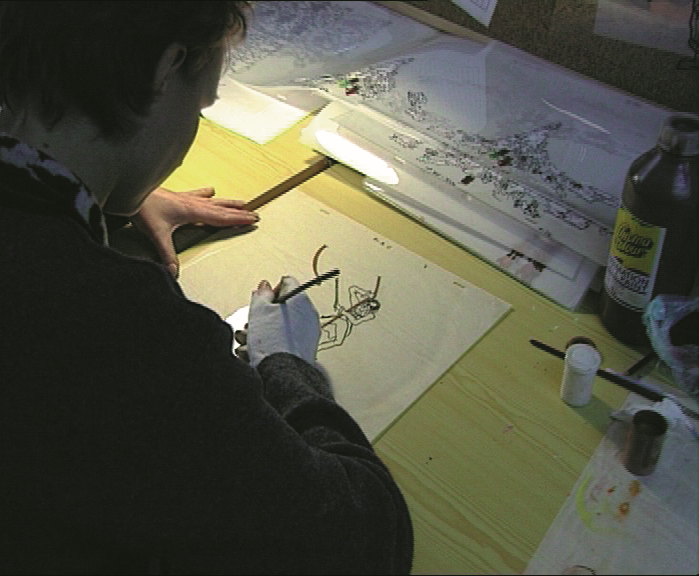
Drawing and timing emerge together in working sheets.
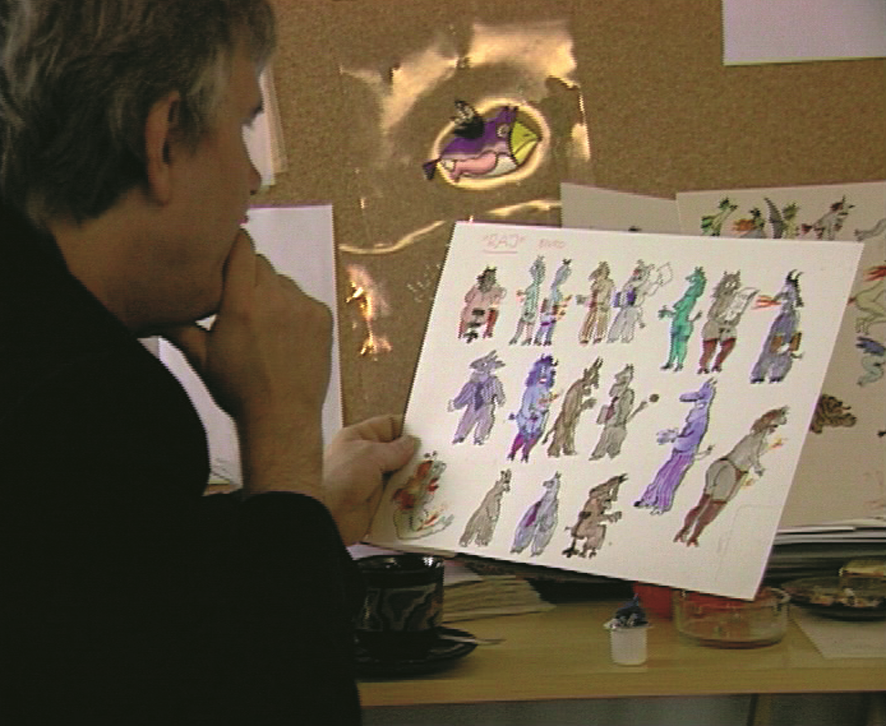
Frame logic visible in the drawn contour itself.
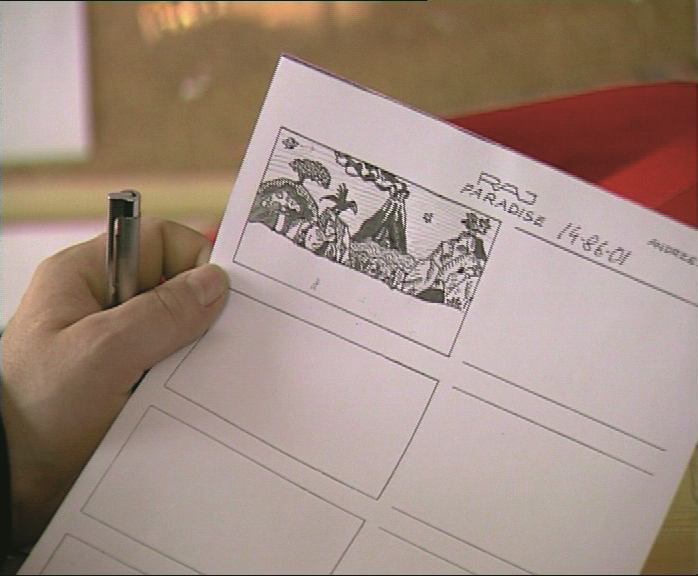
The image taking shape through direct manual control.
Archive mass, film material and the physical scale of the work.
These images matter because they show not just artistic intention, but production volume: stacks of paper, preserved scene material, film strips and archive depth. Eden exists materially. That fact is part of its cultural and commercial value.
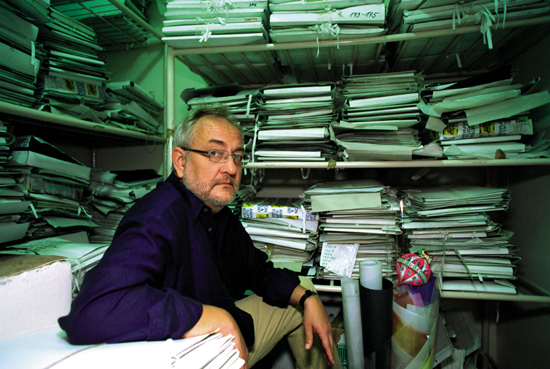
Producer Tomasz Filipczak among preserved production documents and paper materials.
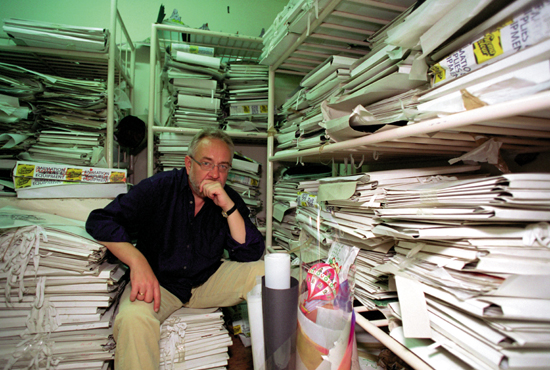
The archive as evidence of full feature-scale manual production.
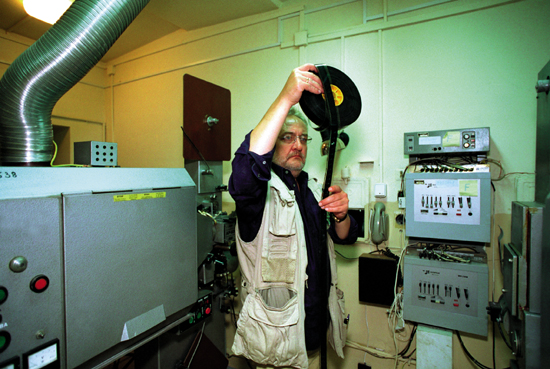
Analog image support preserved as part of the surviving material record.
The process did not end at drawing.
The production record also extends into photography and sound. Camera work, film handling and music supervision were integral parts of the authored structure of Eden, not postscript departments attached at the end.
- Music as structure
The brief documents and production materials place sound inside the logic of the film from the start. - Analog image handling
Camera and film processes remain visible in the surviving archive photography. - Collaborative authorship, materially grounded
A strongly authored film realized through specialised hand work across departments.
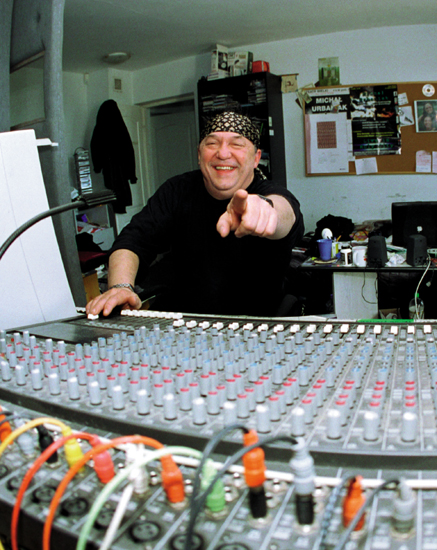
Michał Urbaniak, whose contribution was structural to the film’s movement and tone.
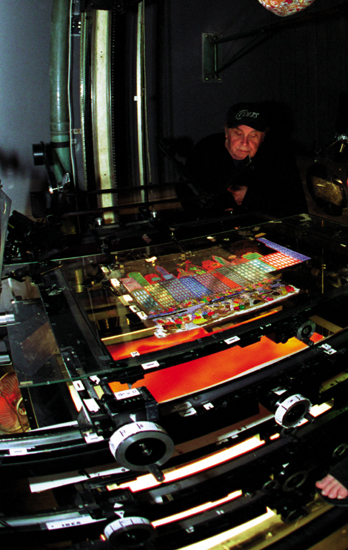
Layered material prepared for photographic capture.
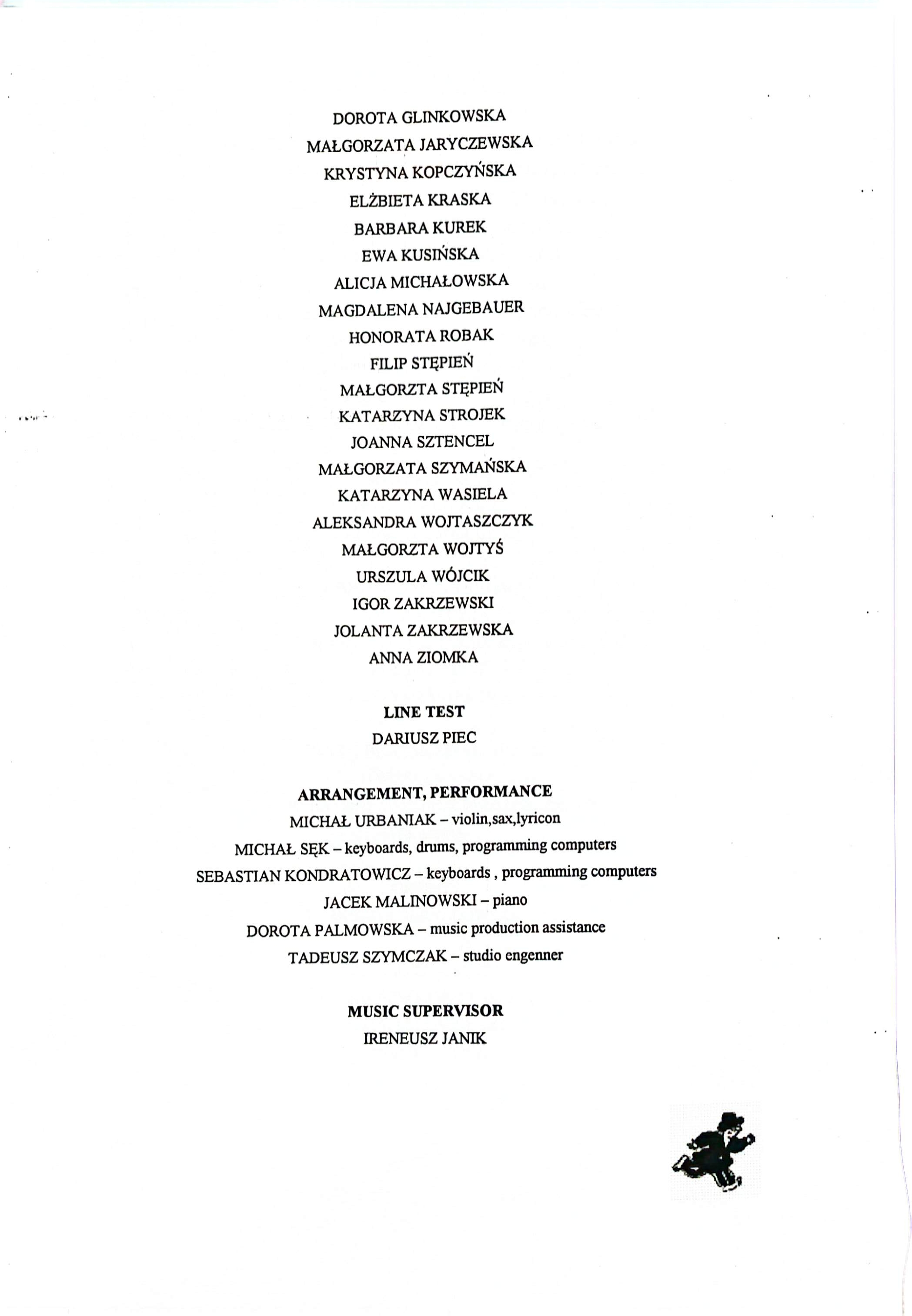
A period production sheet mapping painting, animation, photography, editing and sound.
The process is part of the value.
Eden is not valuable only because a finished film exists. It is valuable because the process survives in visible form: storyboard logic, authorial texts, hand-painted elements, archive depth, film materials and production photography. That gives the project unusual strength not only for restoration and reintroduction, but also for exhibition, publishing, serious contextual framing and carefully chosen future adaptations.